
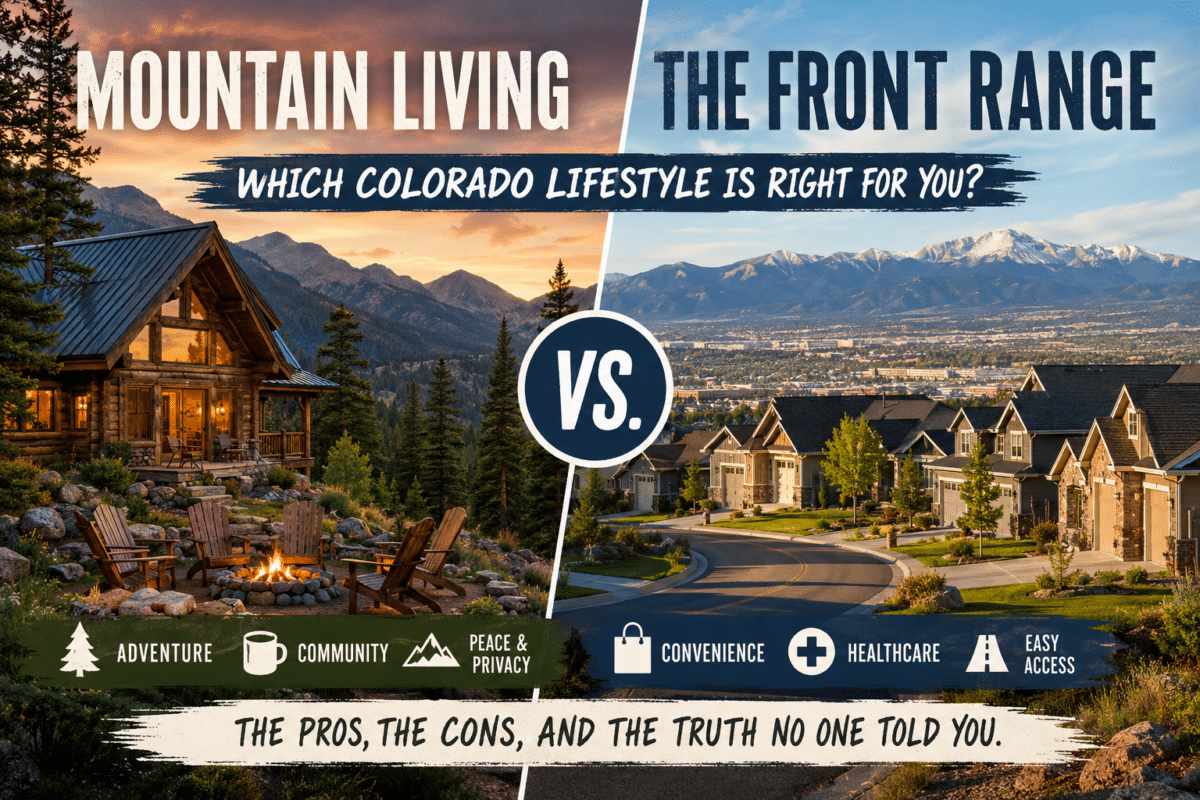
Which Colorado Lifestyle Is Right for You?
One of the biggest decisions people face when moving to Colorado isn’t simply choosing a house—it’s choosing a lifestyle.
Should you wake up surrounded by towering pines and mountain views, or would you rather enjoy the convenience and accessibility of Colorado’s Front Range communities?
As a local real estate professional, I’ve helped many buyers make this decision, and I’ve spent countless days exploring and enjoying Colorado’s mountain towns myself. The truth is, there isn’t a one-size-fits-all answer. It simply depends on the kind of life you want to live.
🏔️ Mountain Living: Privacy, Nature, and Adventure
For many people, moving to Colorado means escaping city life. Mountain communities offer a peaceful setting that can feel like a permanent vacation.
Why People Love Mountain Living
Incredible Scenery
Mountain properties often feature towering pine forests, rock formations, abundant wildlife, and panoramic views that are difficult to find in suburban neighborhoods.
More Privacy
Many mountain homes sit on larger lots, giving homeowners more space and a quieter atmosphere.
Outdoor Recreation
Living in the mountains often means easy access to hiking, fishing, mountain biking, camping, ATV trails, and winter sports.
Cooler Summers
Higher elevations generally provide milder summer temperatures, making outdoor activities enjoyable throughout the season.
❄️ Winter Isn’t a Season—It’s a Lifestyle
One of the biggest things buyers underestimate is winter.
Many Colorado mountain towns receive significantly more snowfall than the Front Range. In some communities, accumulating six feet or more of snow over the course of a winter is completely normal.
Snow removal, icy roads, keeping extra supplies on hand, and driving an all-wheel-drive or four-wheel-drive vehicle become part of everyday life.
If you’re dreaming about mountain living, you should also be comfortable with mountain winters.
💰 Everyday Expenses Can Be Higher
Another surprise for many newcomers is the cost of daily living.
Groceries, fuel, and other necessities are often more expensive in smaller mountain communities.
Just a few days ago, I was visiting several mountain towns and noticed fuel prices averaging about seventy-five cents more per gallon than what we were paying in Colorado Springs.
It may not seem like much at first, but over time those additional costs can add up.
🌲 Mountain Towns Have Changed
I’ve watched Colorado’s mountain communities grow over the years.
Many of the quiet trails and hidden places that locals enjoyed have become popular destinations. Growth has brought more visitors and new residents, changing the character of some areas.
For some people, that’s exciting. For others, it can be an adjustment if they’re expecting complete solitude.
☕ My Favorite Part About Mountain Towns
For me, the biggest advantage isn’t the scenery—it’s the people.
Life tends to move at a slower pace. You see more people sitting in coffee shops reading books, talking about upcoming adventures, and planning hiking, rafting, skiing, or camping trips.
Conversations often revolve around experiences instead of possessions.
In mountain communities, an old 1985 Volkswagen bus covered in kayaks and camping gear can earn more admiration than an exotic sports car in the Front Range.
There is a culture that values adventure, simplicity, and enjoying the outdoors.
🤝 The Hometown Feeling
If you move to a mountain town full-time, you’ll quickly establish your own routine.
You’ll probably have a favorite local coffee shop, a favorite gas station, and a favorite restaurant. Before long, you’ll start recognizing the same faces at the grocery store, local events, and on the hiking trails.
You’ll build relationships with the people who live there, and they’ll begin recognizing you as a local too.
That sense of community creates a true hometown feeling that is becoming harder to find in many larger cities.
🏥 Healthcare and Retirement Considerations
For retirees, healthcare access should be part of the conversation.
Some mountain communities offer excellent medical services, while others have more limited options. Depending on where you live, specialist appointments or certain procedures may require regular trips back to the Front Range.
Another factor to consider is elevation. Many mountain towns sit above 8,000 feet, and that altitude can affect people differently, especially those with certain heart or lung conditions.
If you’re considering a permanent move to higher elevations, it’s a good idea to discuss it with your physician before making the transition.
🌆 Front Range Living: Convenience and Community
The Front Range offers a different kind of Colorado lifestyle.
Residents enjoy modern neighborhoods, easier commutes, and quick access to shopping, dining, entertainment, and healthcare.
Advantages of Front Range Living
Convenience
Most Front Range communities are close to grocery stores, hospitals, schools, restaurants, and major highways.
More Housing Options
Homebuyers can choose from new construction, luxury neighborhoods, golf course communities, townhomes, and low-maintenance properties.
Easier Daily Living
Public utilities, paved roads, and shorter travel times make everyday life simpler for many families and retirees.
Community Amenities
Many neighborhoods include parks, walking trails, recreation centers, clubhouses, and organized events.
🚗 Challenges of Front Range Living
While the Front Range offers convenience, it isn’t perfect.
- Increased traffic and population growth.
- Smaller lots and less privacy.
- Warmer summer temperatures.
- A faster pace of life.
For some buyers, those trade-offs are worth it. For others, they become the reason to look toward the mountains.
🏔️ Mountain Living Is Not the Same as Living Near the Mountains
This is one of the biggest misconceptions I see from people moving to Colorado.
Many buyers picture themselves waking up to mountain views, sipping coffee on the porch, and spending weekends hiking or fishing.
What they don’t always realize is that you don’t necessarily have to live deep in the mountains to enjoy that lifestyle.
In fact, many of my clients eventually discover they don’t want to live in the mountains—they want to live close enough to enjoy them whenever they want.
The Best of Both Worlds
Communities along the Front Range can provide a balance that’s difficult to find elsewhere.
You can enjoy:
• Larger lots and mature pine trees
• Beautiful mountain views
• Easy access to hiking and outdoor recreation
• Shorter commutes to work
• Quick access to major hospitals and healthcare
• Convenient shopping, restaurants, and everyday services
Instead of driving an hour for groceries or a doctor’s appointment, you can often have both adventure and convenience.
Weekend Adventure Without the Daily Challenges
Living near the mountains allows you to enjoy all the things that make Colorado special without making every day feel like an expedition.
When a snowstorm rolls through, you can choose whether you want to head into the mountains for skiing or simply enjoy the view from home.
You can spend the weekend camping, hiking, mountain biking, or fishing, then return to a neighborhood with reliable utilities, paved roads, and nearby amenities.
For many families, retirees, and professionals, that balance turns out to be the perfect fit.
My Personal Perspective
After spending years living in Colorado’s mountain towns, I’ve grown to appreciate both lifestyles.
I love the slower pace of mountain communities, the friendly conversations at local coffee shops, and the hometown atmosphere where you begin recognizing the same people at the grocery store, restaurant, and hiking trail.
But I’ve also learned that there is tremendous value in being able to enjoy the mountains without giving up everyday conveniences.
Some of the happiest homeowners I’ve worked with have found that sweet spot—living near the mountains while keeping easy access to everything the Front Range has to offer.
You don’t have to choose between adventure and convenience. In Colorado, you can often have both.
The real question isn’t whether you should live in the mountains.
It’s whether you want the mountains to be your backyard—or your neighborhood.
For many people relocating to Colorado, that simple distinction makes all the difference.
Final Thoughts
There isn’t a right or wrong answer when it comes to choosing between mountain living and the Front Range. There is only the lifestyle that best fits you and your family.
Some people dream of waking up surrounded by towering pines, fresh mountain air, and a close-knit community where everyone seems to know each other. Others value the convenience of nearby shopping, healthcare, restaurants, and shorter commutes while still being able to escape to the mountains whenever they choose.
The good news is that the Pikes Peak region offers both lifestyles—and just about everything in between.
Whether you’re looking for a mountain cabin, a home nestled among the pines, or a property along the Front Range with easy access to Colorado’s outdoor adventures, there is a place that can match the life you’ve been dreaming about.
As someone who has spent years living in Colorado’s mountain towns and helping families relocate to this incredible state, I’ve learned one simple truth:
You don’t have to choose between adventure and convenience. In Colorado, you can often have both.
And perhaps the most important thing to remember is this:
The Best Place to Live Is the One That Fits Your Lifestyle
At the end of the day, the best place to live in Colorado isn’t where everyone else wants to be—it’s where your daily lifestyle matches the life you’ve been dreaming about.
If you’re considering a move to the Colorado Springs area and aren’t sure whether mountain living or the Front Range is the better fit, I’d be happy to help you explore the communities that best match your goals, hobbies, and vision for the future.
After all, you’re not just buying a home.
You’re choosing the way you’ll live every day.
Frequently Asked Questions About Living in the Mountains vs. the Front Range
Is it better to live in the mountains or the Front Range?
There is no one-size-fits-all answer. Mountain living offers privacy, natural beauty, and a slower pace of life, while the Front Range provides convenience, healthcare, shopping, and shorter commutes. The best choice depends on your lifestyle and priorities.
What are the biggest advantages of mountain living in Colorado?
Many people choose mountain living for the scenery, outdoor recreation, cooler summer temperatures, larger lots, and the close-knit communities often found in smaller towns. Many residents also enjoy the slower pace of life and the strong connection to nature.
What are the biggest challenges of living in the mountains?
The most common challenges include heavier snowfall, longer drives for shopping and healthcare, higher fuel and grocery costs, wildfire awareness, and maintaining homes that may rely on wells, septic systems, or private roads.
How much snow do Colorado mountain towns get?
Snowfall varies widely depending on location and elevation. Some mountain communities receive several feet of snow each winter, making snow removal and winter driving a normal part of everyday life. Before purchasing a home, it’s important to research the average snowfall for the specific town you’re considering.
Is living at a high elevation healthy?
Many people thrive at higher elevations, but mountain towns above 8,000 feet can affect individuals differently, especially those with heart or lung conditions. If you’re considering a permanent move to a higher elevation, it’s wise to discuss it with your doctor.
Are groceries and fuel more expensive in mountain towns?
In many cases, yes. Smaller mountain communities often have higher transportation costs, which can lead to more expensive groceries, fuel, and other everyday necessities compared to the Front Range.
Are mountain towns good places to retire?
They certainly can be, especially for people who enjoy outdoor recreation and a quieter lifestyle. However, retirees should carefully consider healthcare access, winter weather, and proximity to family before making a long-term decision.
Can I enjoy the mountains without living in the mountains?
Absolutely. Many people find that living near the mountains provides the perfect balance between outdoor adventure and everyday convenience. Communities around Colorado Springs, Monument, and Black Forest allow residents to enjoy mountain views and recreation while maintaining easy access to shopping, healthcare, and other amenities.
What should I consider before buying a home in the mountains?
Before purchasing a mountain property, consider:
- Average winter snowfall
- Commute times
- Healthcare access
- Internet availability
- Well and septic systems
- Wildfire risk
- Home insurance costs
- Fuel and grocery prices
- Road maintenance
- Your long-term lifestyle goals
What is the biggest piece of advice you give people relocating to Colorado?
Don’t just buy a house—choose a lifestyle.
Many people think they want to live deep in the mountains, only to discover that living near the mountains better fits their daily routine. Spend time exploring different communities, visit during different seasons, and think about how you want your everyday life to look—not just your weekends.
Still Not Sure Which Colorado Lifestyle Is Right for You?
One of the biggest mistakes I see people make when relocating to Colorado is choosing a home before they choose a lifestyle.
A beautiful mountain cabin might look perfect online, but after a few winters, long drives for groceries, and regular trips for medical appointments, some people realize they would have been happier living closer to the Front Range. On the other hand, many buyers who choose the convenience of the city later wish they had more privacy, larger lots, and a stronger connection to the outdoors.
That’s why I believe the most important part of my job isn’t simply helping people buy a house—it’s helping them find the place that fits the life they want to live.
Having spent years living in and exploring Colorado’s mountain towns and helping families relocate to the Pikes Peak region, I can offer an honest perspective on the advantages and challenges of different communities. Whether you’re considering Black Forest, Monument, Woodland Park, Colorado Springs, or one of Colorado’s mountain towns, I’m happy to help you compare your options.
If you’re thinking about making a move and would like local insight from someone who knows the area, feel free to reach out.
I’d be happy to answer your questions, recommend communities that match your lifestyle, and help you decide whether mountain living, the Front Range, or something in between is the right fit for you and your family.
Because at the end of the day, you’re not just buying a home—you’re choosing the way you’ll live every day.
📞 Call or Text: 719-221-5322
📧 Email: casey@fortunerealty.org
I look forward to helping you discover your perfect place in Colorado.